The Anatomy of a Nation: A Future Without Women in Afghanistan
Throughout history, no society has ever become stronger by silencing its women. A country that excludes half of its population from society will inevitably lose its collective intellect, its ability to think critically, and its capacity for innovation. The roots of discrimination against women go back long before the rise of modern states. Male kinship-based clan structures transformed the public sphere into an arena of power among men, while women were seen primarily as responsible for ensuring biological continuity and kept under constant control. When women are prevented from contributing to knowledge, production, politics, and society, economic vulnerability grows, the social fabric begins to unravel, violence becomes normalized, and politics is trapped in endless cycles.
Afghanistan is one of the clearest and most recent examples of this historical pattern. Under Taliban rule, the systematic exclusion of women has become a state-enforced form of male domination. Women have been barred from education, employment, public spaces, and in many ways even confined to their own homes. This demonstrates how a modern society can be paralyzed when half of its population is forced out of the public sphere. The silence on the streets of Kabul reflects the absence of millions of women who have been erased from society.
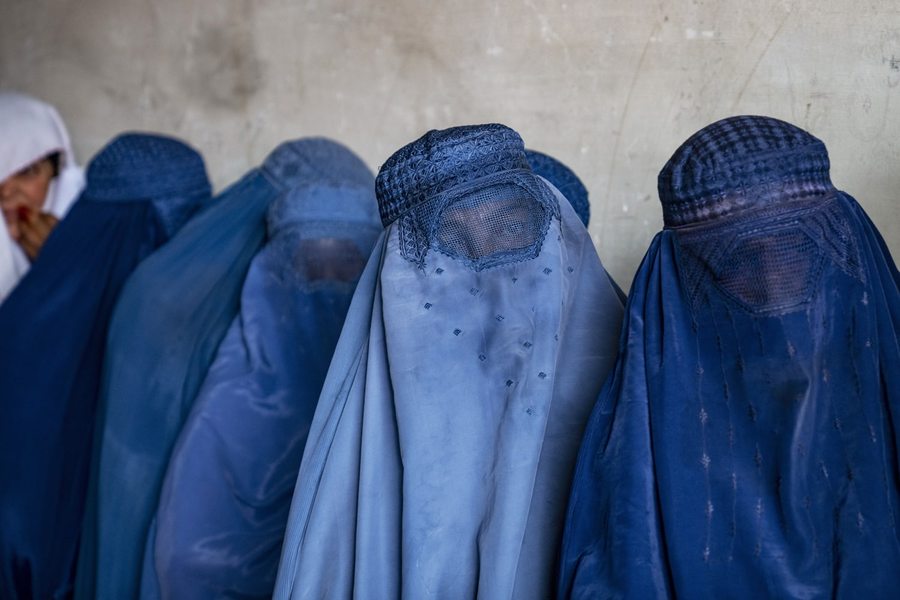
The Taliban's so-called "morality" laws prohibit women from leaving their homes without a male "mahram". They classify a woman's voice as "awrah", effectively banning women from speaking or communicating freely in public. Women are also required to fully cover their faces, rendering them invisible. Together, these restrictions almost completely exclude women from civic life.
For the past four years, the Taliban has effectively denied girls their right to education. Girls who are banned from attending school are not only deprived of educational opportunities, but also of their future social and economic rights and roles. While many parents continue to support their daughters' education despite the risks, the girls themselves have pleaded, saying, "Just let us study. We would even wear sackcloth if that's what it takes, as long as we are allowed to learn." Meanwhile, the Taliban continues to repeat that it is "working on it." This has become nothing more than a policy of indefinite delay aimed at systematically erasing women and girls from the public sphere, ultimately driving many into depression and suicide.
The exclusion of women from education is further reinforced through restrictions on employment. Women are prevented from working in government institutions, civil society organizations, international organizations, and essential sectors such as healthcare and education. When a country systematically removes its teachers, doctors, journalists, and social workers from society, it is doing more than violating human rights. It is a strategy of social collapse. No space that women are forced to leave remains empty. It is replaced by institutional blindness. Afghanistan's economic collapse and ongoing instability are the direct consequences of the systematic exclusion of millions of women from society.