A Climate of Inequality
Discussions of climate change often focus on rising temperatures, melting glaciers, extreme weather events or carbon emissions. Over the past decades, scientific research has transformed our understanding of the climate system, while international negotiations have aimed to coordinate collective responses through new commitments and evolving climate agreements.
Much of the conversation remains centered on measuring the crisis rather than understanding how it affects people's lives. It is often reduced to graphs, statistics, percentages, and global averages. While these are essential for understanding its scale, they are far less capable of illustrating its everyday realities. Climate change is reflected in homes abandoned after repeated floods, harvests lost to prolonged drought, coastlines gradually disappearing beneath rising seas, and communities forced to adapt with increasingly limited resources. These experiences are shaped by existing inequalities and are not distributed evenly across societies.
Existing inequalities shape climate vulnerability. Communities with fewer financial resources and weaker public institutions often experience the most severe consequences, despite having contributed the least to global greenhouse gas emissions. As a result, they have fewer opportunities to reduce risks before disasters occur and face greater difficulties rebuilding.
Climate justice is an approach that views climate change as more than an environmental problem. It recognizes that the effects of the climate crisis are closely connected to existing inequalities and that these inequalities affect both people's experiences of climate change and their ability to respond. This approach places fairness at the center of climate action instead of assuming that every state should be treated in exactly the same way.
One of the central ideas behind climate justice is the principle of historical responsibility. Since the Industrial Revolution, the countries that are now considered developed have produced the largest share of historical greenhouse gas emissions while benefiting from the economic growth made possible by industrialization. Many developing countries, by contrast, have contributed far less to the problem despite facing some of its most severe consequences.
The principle of historical responsibility was formally reflected in the 1992 United Nations Framework Convention on Climate Change (UNFCCC) through the principle of Common but Differentiated Responsibilities and Respective Capabilities (CBDR-RC). CBDR-RC recognizes that all countries share responsibility for addressing climate change, but it also acknowledges that they have contributed to the problem to different degrees and do not have the same capacity to respond.
The influence of CBDR-RC was particularly evident in the Kyoto Protocol. Under the Protocol, legally binding emission reduction targets were assigned primarily to developed countries. Developing countries, on the other hand, were not subject to the same obligations, as their historical contribution to global emissions was significantly lower.
The Paris Agreement adopted a different approach while preserving the principle that countries should not all be expected to take on the same responsibilities. It requires every country to submit and regularly update its own nationally determined contributions (NDCs) and allows countries to determine their own commitments according to their national circumstances and capacities.
The divide between the Global North and the Global South remains one of the defining features of climate inequality. Since the Industrial Revolution, most greenhouse gas emissions have originated from industrialized countries in the Global North, while many of the most severe consequences of climate change are experienced in the Global South. Rising temperatures, prolonged droughts, floods, and food insecurity often coincide with limited financial resources and weaker public institutions, making adaptation and recovery more difficult.
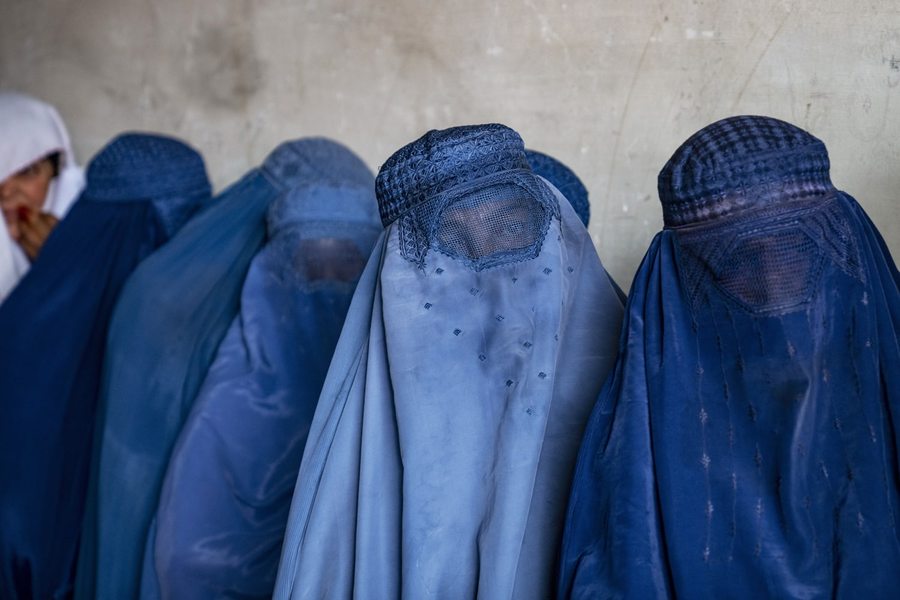
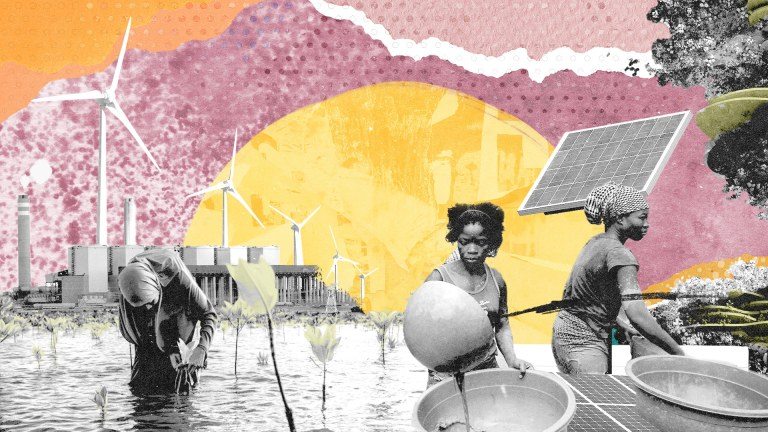
Existing social and economic inequalities continue to shape how people within the same country experience the effects of climate change. Factors such as gender, income, age, disability, and Indigenous identity often determine who is most exposed to climate-related risks. In many regions, women are disproportionately represented in climate-sensitive sectors while continuing to face unequal access to land ownership, financial resources, and political participation. Children and young people have had little influence over the decisions that have shaped the climate crisis, yet they will live with its consequences for far longer than previous generations.
Indigenous Peoples face additional challenges. Despite contributing very little to global greenhouse gas emissions, many Indigenous communities are among those most directly affected by biodiversity loss, deforestation, changing weather patterns, and the degradation of ancestral lands. These pressures threaten not only livelihoods but also cultural heritage and traditional knowledge.
Taken together, these different forms of inequality show that climate justice is about more than the distribution of responsibilities between states. It is equally concerned with who is most affected by its impacts and who has the resources to respond. Although international climate agreements have increasingly recognized these concerns, there is still no universal agreement on how the principles of climate justice should be put into practice. As the climate crisis continues to intensify, addressing it requires more than reducing emissions. It also requires confronting the inequalities that shape who bears its greatest costs.